
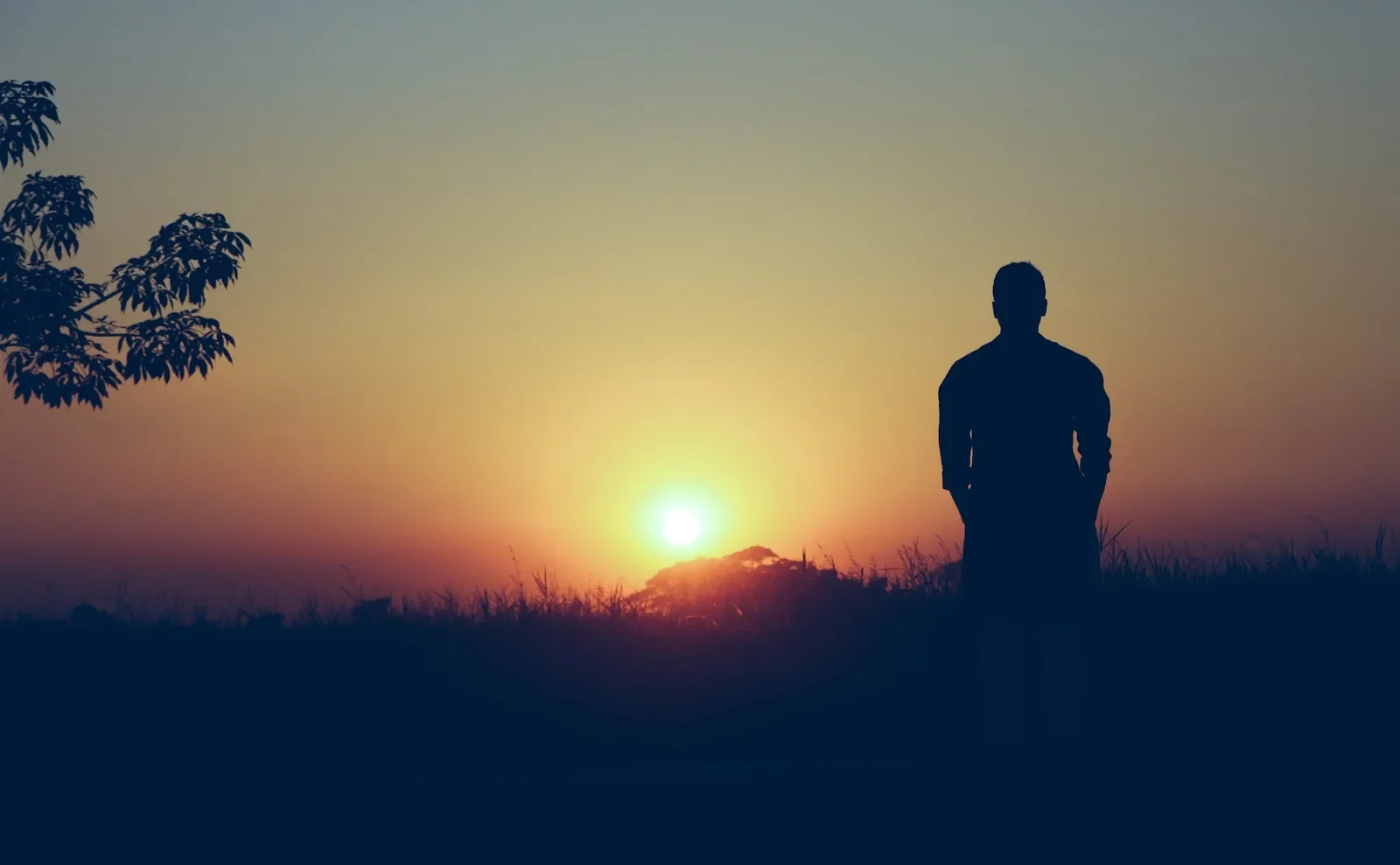
We are the last generation who will remember what silence sounded like before the world learned to buzz.
Look at us now and you might see wrinkled hands, careful movements, or eyes that have witnessed more sunsets than most people will ever count. But if you truly listen — not just to our words, but to the decades folded into our memories — you’ll discover something extraordinary.
We are living proof that human beings can stand at the edge of two completely different worlds and remain whole.
Our story begins in the ashes of uncertainty.
Many of us were born when entire cities were still rebuilding from war. Families learned to laugh again after years of rationing and fear. Childhood was measured not in screen time, but in scraped knees from climbing trees and the universal law that when streetlights flickered on, it meant home.
We played with toys that required imagination, not batteries.
Marbles clicked across dusty ground. Cards shuffled at kitchen tables while something simple but delicious simmered on the stove. We built forts from blankets and cardboard, created entire worlds with sticks and stones, and believed that the greatest adventure was whatever we invented that afternoon.
There were no alerts. No notifications. No endless scroll pulling our attention into a screen.
Instead, we built friendships by showing up — at someone’s door, at the park, at the corner where everyone gathered after school.
Then music exploded into our teenage years like lightning through a summer sky.
The 1960s and 1970s didn’t just arrive — they announced themselves with electric guitars, voices that refused to whisper, and the radical idea that young people could imagine a better world. Woodstock in 1969 wasn’t just a concert; it was a moment when hundreds of thousands stood together in the rain and mud, believing that music and community could change everything.
We danced. We questioned. We grew up during a time when culture itself was being rewritten. Education required patience back then.
Knowledge didn’t arrive at the speed of Wi-Fi. We copied notes by hand from chalkboards, spent afternoons in libraries surrounded by the smell of old books, and learned that finding an answer sometimes meant flipping through index cards in wooden drawers until your fingertips were dusty.
Mistakes were corrected with erasers and white-out, not a quick tap of “undo.”
And love? Love unfolded slowly.
We fell in love to the crackle of vinyl records spinning on turntables. We recorded mixtapes, carefully selecting each song, because giving someone music meant something. First kisses happened without a dozen people watching through phone screens. Promises were made face to face, and marriages were built one day, one choice, one conversation at a time.
But then the world began to accelerate. We are the only generation to have lived an entirely analog childhood and a fully digital adulthood.
We remember waiting weeks for a letter to arrive, the anticipation of seeing familiar handwriting on an envelope. We remember rotary phones with cords that stretched across kitchens, and party lines where neighbors occasionally heard your conversations by accident.
Today, we video call grandchildren across oceans.
We witnessed humanity step onto the Moon in 1969 — millions of us gathered around black-and-white televisions, holding our breath as Neil Armstrong spoke words that still echo: “One small step for man, one giant leap for mankind.”
We watched computers shrink from room-sized machines with punch cards to devices that fit in our pockets and hold more knowledge than entire libraries.
We lived through the fear of polio, celebrated the arrival of vaccines, and recently endured the strange silence of a global pandemic that reminded us resilience never goes out of style.
We’ve seen science unlock the structure of DNA, decode the human genome, and begin editing genes like sentences in a book.
We’ve watched transportation evolve from steam engines to electric cars that glide silently through streets.
Few generations have witnessed such breathtaking transformation.
And yet — despite everything that changed — we remember what remains.
We still know the joy of cold lemonade on a hot afternoon.
We still understand the value of a conversation that unfolds slowly, without interruption.
We still carry the taste of vegetables pulled fresh from a garden, the sound of laughter echoing down a quiet street at dusk, and the comfort of knowing that some things — kindness, patience, presence — Never become outdated.
Our memories stretch across decades like bridges between worlds.
We’ve celebrated births, mourned losses, watched friends depart, and carried their stories forward. We are living proof that a human life can hold both handwritten love letters and text messages, both rotary phones and smartphones, both black-and-white television and streaming services — without losing the thread of who we are.
We are not relics. We are living bridges between two eras.
Our perspective offers something rare: the reminder that progress doesn’t have to erase wisdom. That speed doesn’t have to replace reflection. That technology can be embraced without forgetting the lessons learned in slower, quieter times.
So when someone calls us “the elderly,” we can smile.
Because that simple word holds something profound.
We are the generation that crossed centuries, witnessed eight decades of transformation, and walked from the age of handwritten letters to the era of artificial intelligence — without losing our humanity along the way.
What a life we have lived.
What an extraordinary story we continue to carry.
And if you belong to this generation, take a moment today to recognize something powerful: You are not simply growing older. You are living history.
You are part of a generation that will always remain one of a kind.
And in the quietest, most meaningful way, you have become legendary.
Not because of what you owned, but because of what you witnessed, adapted to, and carried forward.
The world will never see another generation quite like yours.
Do YOU feel that YOU are living history? How so?
GOD NEVER ALLOWS PAIN WITHOUT A PURPOSE!
The above memories that we have, helped make America America. As times change, we are forgetting who we are. We are more than thumbs on our smart phones and sound bites on our screens. That is why I wrote WHAT MAKES AMERICA AMERICA.
I have 62 short Chapters that look at every aspect of life in America, from Football to the Supreme Court. Here is the link https://a.co/d/00Lyqe1C that will connect you with my Amazon page. Click READ SAMPLE and you can read the First Two Chapters of the book for FREE. It’s a great way to celebrate America’s 250th.
