
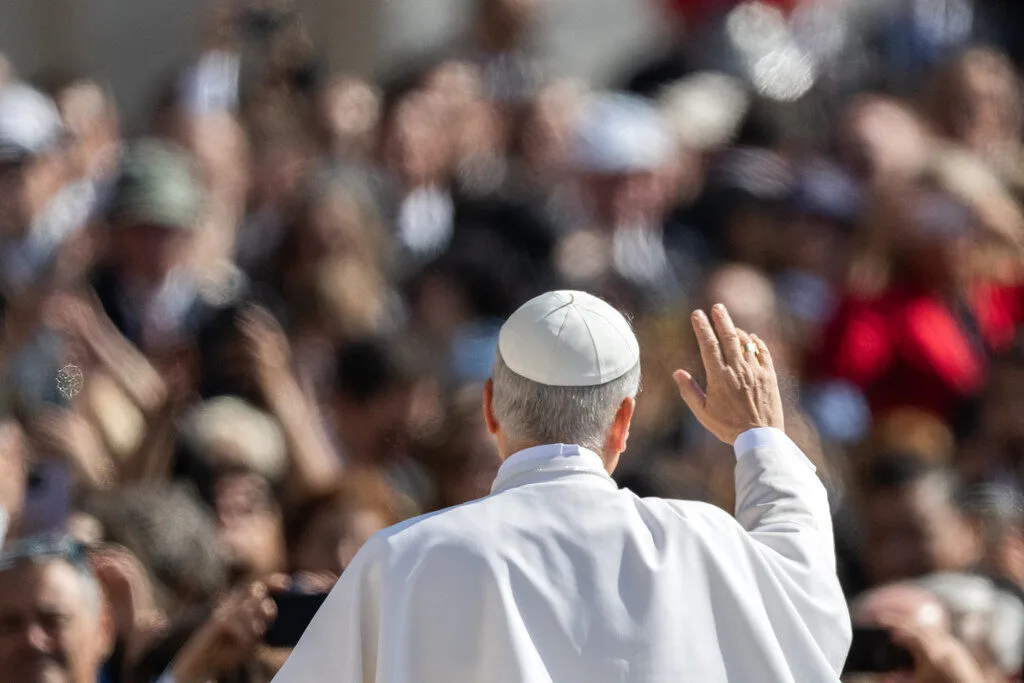
This is the second half of the article about Pope Leo XIV who was interviewed by Crux Senior Correspondent Elise Ann Allen at his residence in the Vatican’s Palazzo Sant’Uffizio July 30, 2025 as she was writing her new book about the Pope.
Second, many commentators since the interview has been published have already begun to speculate as to whether Leo will be a “second Pope Francis,” carrying forward the agenda of his predecessor, or whether he will shift tone and direction.
Some outlets critical of Prevost prior to the election, including InfoVaticana, have already run commentaries lamenting that Leo seems keen to carry many of Francis’s agenda items forward, while others have said he represents a change in direction, for better or worse.
My impression after speaking with Pope Leo and hearing his thoughts on most important matters in the world and in the church firsthand is that both of these interpretations hold truth: Pope Leo is committed to the overall direction of his predecessor, especially when it comes to social justice issues, targeting ideology and polarization, and promoting the synodal church.
However, Leo is not Francis, and he will do it in his own way. Francis, for one, could often be impulsive, and Leo is not, he will take his time and listen and reflect before making a decision.
Francis also notoriously distrusted his own system and worked around it, whereas Leo’s instinct will be to work with and through it, while also trying to continue the reforms he believes are needed.
In terms of tone, Francis was bold and direct and, because of that, was seen by many as divisive, whereas Leo is very clear about his intentions, but will be calmer and softer in his delivery. Francis also frequently made unilateral decisions, while Leo’s approach to decision-making is through collaboration and dialogue.
Leo has already said Pope Francis’s reforms of the Roman Curia in his 2022 constitution Predicate Evangelium provide a crucial framework, but he also said, without revealing any details, that he plans to modify a few things. He will also insist on the need to welcome LGBTQ+ individuals in the church and he will keep putting women in leadership, but where Francis was often ambiguous, Leo is more willing to articulate where he draws the line, even if their approach is more or less the same.
Another takeaway from my conversations is that Pope Leo can be transformative on the issues of Vatican finances and the clerical sexual abuse crisis.
As someone who has spent nearly his whole priesthood in leadership and administration of some kind, he is used to managing a budget and has extensive experience doing just that in a variety of projects and entities along the way, whether it is charitable donations for Caritas, raising money to rebuild a church, or managing his diocese and religious order.
With the wealth of administrative experience that he has, if Leo says, as he did to me, that he is not concerned about the Vatican’s finances or its practically non-existent pension fund, I am inclined to give him the benefit of the doubt. He seemed to already have several ideas in place, and I am looking forward with great interest to seeing what he does.
Pope Leo is also someone who is very experienced when it comes to dealing with clerical abuse cases. He dealt with these cases while serving as a judge in the ecclesial tribunal of Trujillo as a missionary, and he also dealt with the issue extensively while managing his Augustinian order and as bishop of Chiclayo, a period when he also served as president of the national safeguarding commission.
Leo has listened to and met with victims over the years, and he played a key role in the local investigation into the Sodalitium Christianae Vitae (SCV) in Peru, a lay community suppressed by Pope Francis shortly before his death.
Based on my personal experience and the testimonies that I’ve heard as part of the book-writing process, Leo is keenly aware of the various aspects of the clerical abuse crisis and the challenges that come with it, from the importance of welcoming and listening to victims, to ensuring a due process and also that justice be as swift as possible.
Given his extensive background on this issue, he is uniquely positioned to take the church to another level when it comes to safeguarding efforts, and also streamlining the judicial process.
Finally, my last takeaway is that while the “honeymoon” phase of Leo’s papacy won’t last forever, especially as he begins to make more serious decisions and appointments, the sense of calm and balance he has brought so far has been refreshing.
He is someone who very much wants to take the temperature down, and while understanding that that is not going to be possible entirely, his commitment to building bridges, and to fostering unity and communion in a time a polarization, is clear, and I think will be a hallmark of his papacy. This was obvious from his own demeanor, but also the tone of his answers and the language he chose.
All in all, I think Pope Leo is a very fascinating man with a lot brewing beneath the surface, and I think that despite the calmness he has brought so far, he will certainly surprise us.
Follow Elise Ann Allen on X: @eliseannallen
This interview was published in CRUX on September 22, 2025.
Roman notebook: What it’s like to interview the Pope.
What struck YOU the most about Pope Leo in reading this article?
GOD ANSWERS THE MESS OF YOUR LIFE WITH ONE WORD: “GRACE!”
Please share this article with many people that you know.
