
Recently, at six o’clock in the morning, I visited a Memory Care facility to anoint an elderly patient. When I finished, I tried to leave. But the doors were locked, and with only a skeleton crew working, no one was around to let me out.
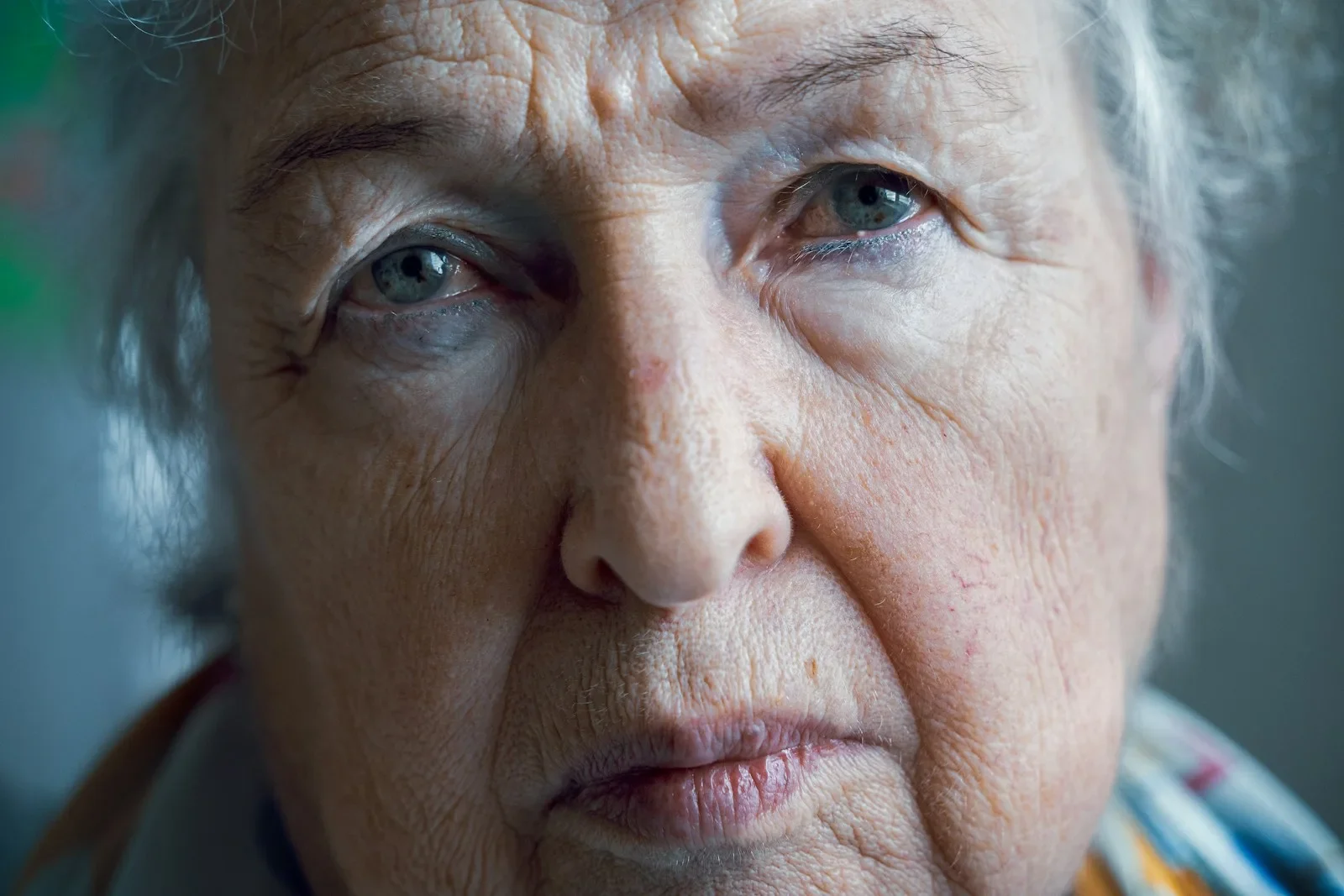
An elderly woman was wandering the hallway. I explained that I was a priest, that I had finished visiting someone, and that I needed help getting out. She listened politely and nodded with apparent understanding.
I could almost hear her thinking, “Oh, Father, we’re all trying to get out!”
I smiled. But afterward, I found myself thinking about something much deeper. I was locked in for a few minutes. Some of these people have been locked in for years. Not simply behind secured doors, but within minds that can no longer find their way through the memories of a lifetime.
And I think especially of my very good friend, Larry. Larry has been in Memory Care for ten years. Ten years!
Last year, his wife, Carolyn, died. They had been married for sixty-two years. Sixty-two years of sharing a home, raising a family of 6 children, celebrating joys, enduring sorrows, and building a lifetime of memories.
And when Carolyn died, Larry’s memory had deteriorated so severely that he was unable to attend her funeral. Think about that. The woman with whom he had shared sixty-two years of marriage was gone, and Larry could not even be present to say goodbye.
What a heartbreaking reminder of what dementia can take from a person — and from an entire family.
I wonder what remains in Larry’s heart of those sixty-two years. Does some familiar voice, a gentle touch, or a moment of tenderness still awaken something deep within him? We may never know.
But I believe something important. Just because Larry may no longer remember Carolyn doesn’t mean their sixty-two years of love have disappeared.
The memories may be fading. But the love they shared was real. Their marriage mattered. Their lives together mattered. And nothing can erase that.
I’ve known brilliant executives who once directed enormous organizations but now struggle with the simplest daily activities. What a humbling reminder that intelligence, success, wealth, and power are temporary gifts.
But here’s something we must never forget. A person who loses the ability to remember does not lose the right to be remembered. A mind may fail. But human dignity never does.
And what about the families?
The wife who visits her husband every afternoon, even though he no longer recognizes her.
The daughter who feeds her mother, remembering the countless meals her mother once prepared for her.
The exhausted husband who finally places his wife in Memory Care, then goes home feeling guilty because he simply cannot do any more.
Sometimes love means holding on. Sometimes love means accepting that we cannot do everything alone.
And where is God in all this?
Why does God allow someone to slowly lose the memories that made life so precious?
I don’t have an easy answer. After fifty-seven years as a priest, I’ve learned that some suffering cannot be explained away with a Bible quotation.
But I believe God is present.
In the caregiver who gently brushes someone’s hair.
In the nurse who patiently answers the same question for the twentieth time.
In the friend who keeps visiting, even when the conversation is no longer what it once was.
Jesus said, “Whatever you did for one of these least brothers of mine, you did for me.” God is especially close to those whose minds can no longer comprehend His presence.
There are some profound lessons here for all of us —
Our worth is not measured by what we remember, what we accomplish, or how independent we remain.
Love is not diminished simply because it is no longer recognized.
And caring for someone who cannot thank us may be one of the purest expressions of love.
That morning, I eventually found my way out of the locked Memory Care unit.
But I left thinking about those who could not.
And I thought again of Larry and Carolyn.
Sixty-two years together. Ten years of Memory Care. And a final goodbye that Larry could not attend.
What a cruel disease. What an extraordinary test of love.
But our Christian faith offers a hope that even Alzheimer’s cannot destroy.
Jesus promised, “In my Father’s house there are many dwelling places.”
I like to imagine that someday, when Larry’s earthly journey is finished, there will be no locked doors, no confusion, no fading memories. Carolyn will be there to welcome him.
And he will know her again. Not because we understand the mysteries of heaven, but because we trust the God who created us for eternal life.
Even when someone can no longer remember God, God never forgets them.
Not their name. Not their story. Not their marriage. Not a single moment of their life.
And when every other memory fades, they remain forever remembered — and loved — by God.
How has someone with Alzheimer’s or dementia had an impact on YOUR life?
MOLD ME, SHAPE ME, UNTIL I THINK LIKE YOU DO, LORD!
I really want to hear from YOU! You always leave me in the dark with what you’re thinking or feeling. medardlaz@aol.com
