
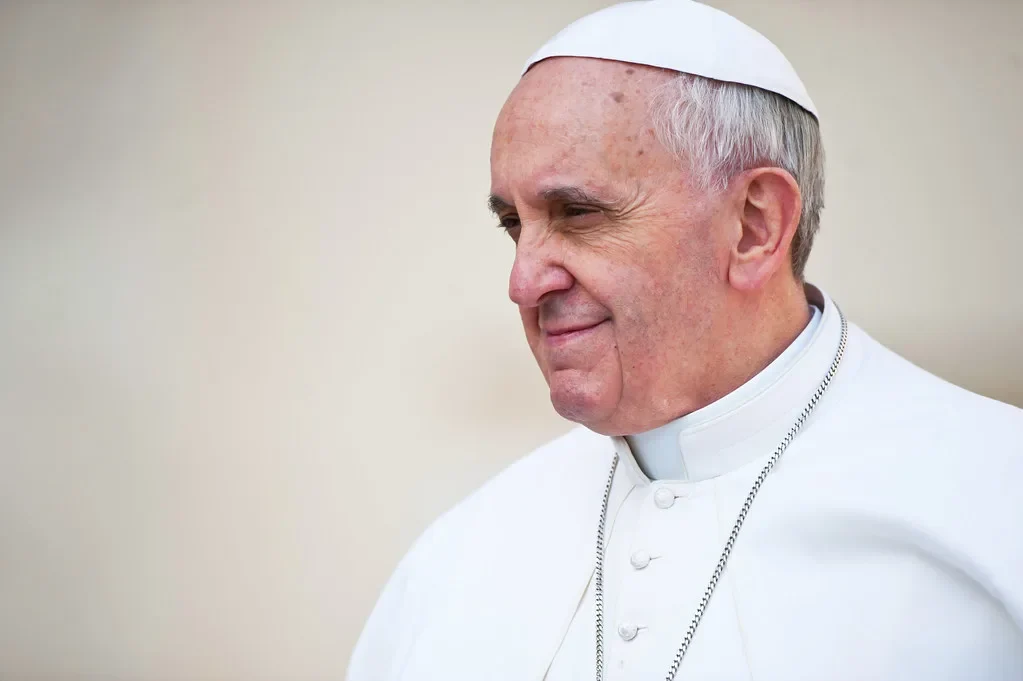
One year ago on April 21, 2025, the Easter peals of Saint Peter’s were tolling when word came that Pope Francis was dead, struck down in the early morning hours by a cerebral stroke, and something in the heart of the Church went still. Pope Francis was gone. And the arguments began almost immediately — as if grief were a luxury we could not afford before the verdict was rendered.
I want to resist that impulse. I want, instead, to remember…..
A Tectonic Shift in Tone
There is a temptation to reduce the Francis pontificate to its controversies, its curial skirmishes, its unfinished business. But to do so is to miss what was most consequential about it: the tone shifted, and tonal shifts in the Church are seismic events.
Benedict XVI was a man of luminous theological precision. His was, in many ways, a church of careful boundaries — a church that prized doctrinal clarity and was, at times, willing to contract in order to maintain it. There is nothing dishonest about naming this. The smaller but purer ecclesiology, however unintentional, had real pastoral consequences. People felt the cold draft of a closing door.
Francis blew it open.
Todos, todos, todos. Everyone, everyone, everyone. Those three words, spoken at World Youth Day in Lisbon, were not a slogan. They were a theological statement. The Church of Jesus Christ is not a reward for the righteous. It is a field hospital. It smells, as Francis said unforgettably, of the sheep.
Who Am I to Judge?
Perhaps no five words in the modern papacy landed with greater force. Flying home from Rio de Janeiro in July 2013, Pope Francis was asked about a gay priest serving in the Vatican. “Who am I to judge?” he replied.
The sky did not fall. The Catechism was not rewritten. But something changed — something that needed to change. The Church’s public moral witness had become, in the perception of many, disproportionately obsessed with a narrow range of pelvic concerns. Sexuality dominated headlines, dominated chancery conversations, dominated the imagination of those looking in from outside. And meanwhile, the poor were hungry, the planet was warming, migrants were drowning in the Mediterranean, and nuclear arsenals were expanding.
Francis enlarged the moral frame. Laudato Si’ was not an environmental pamphlet. It was a moral encyclical of the first order, rooting care for creation in the same sacramental theology that grounds care for the human person. Laudate Deum pressed the point with urgency. The seamless garment was not abandoned — it was finally worn whole.
Who am I to judge? The honest answer is: none of us, finally, is. That is God’s prerogative. Ours is accompaniment.
Another Name for God Is Compassion
Francis said it plainly, more than once: another name for God is compassion. This was not sentimentality. It was theology — rooted in the Hebrew rahamim, the womb-love of God, and in the Greek splanchnizomai, the gut-wrenching mercy that moved Jesus when he encountered the suffering crowd.
A Church that names God as compassion cannot be primarily a Church of condemnation. It can correct. It can teach. It can hold firm on truth. But its first instinct, its constitutive posture, must be the arms of the father running down the road toward the returning son — before the son has finished his prepared speech.
This is not a soft Gospel. It is a demanding one. Compassion costs everything.
By Msgr. Art Holoquin
Do YOU feel that Pope Francis changed the TONE of the Church? How so?
IT’S NOT ABOUT HOW CHRISTIAN YOU LOOK ON THE OUTSIDE. IT’S ABOUT YOUR PERSONAL RELATIONSHIP WITH JESUS.
Are you looking for a special Mother’s Day present or a Graduation gift? Please consider giving your Mom or your graduate a copy of my new book, WHAT MAKES AMERICA AMERICA. People who have read it are giving me great reviews.
I have 62 short Chapters that look at every aspect of life in America, from American food to Women. Here is the link https://a.co/d/00Lyqe1C that will connect you with my Amazon page. Click READ SAMPLE and you can read the First Two Chapters of the book for FREE.
