
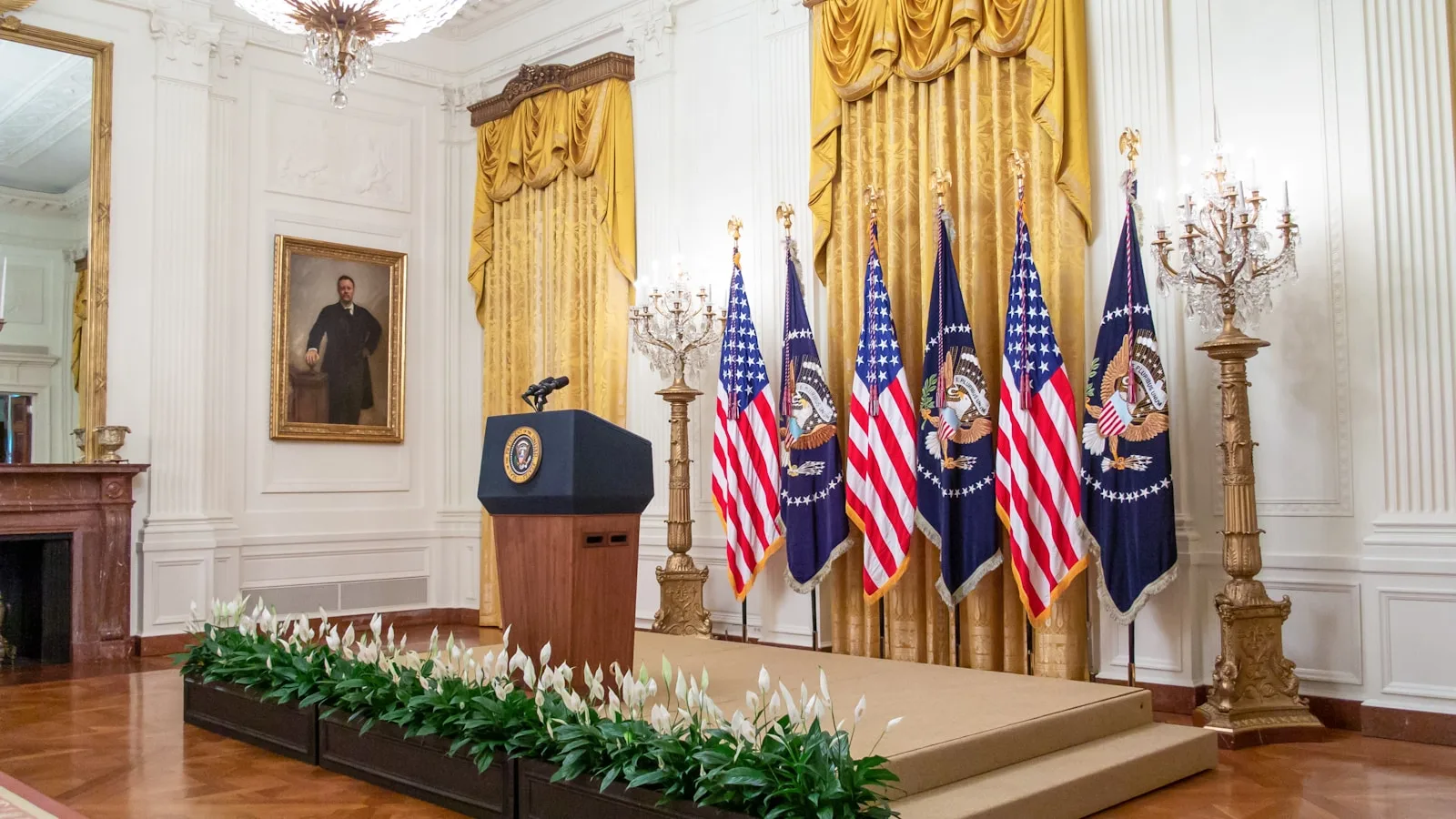
The Character of the President Makes America America
The President of the United States is not merely a public official. The President is the only individual elected by the entire nation, the only person who embodies both the Head of State and Head of Government, and the only leader whose personality, values, and example shape national identity as deeply as policy. The presidency is not just an office — it is a mirror. It reflects what the nation wants, what it fears, what it hopes for, and what it believes about itself. In that way, the President helps make America America.
The power of the presidency is shaped not only by constitutional authority, but by personal human qualities — character, demeanor, experience, empathy, vision, and the capacity to unify. These traits are not abstract virtues; they are working tools. They define how a President governs, how they lead, and whether they elevate or divide the nation they serve.
Character is the president’s invisible power source. It determines whether they see the office as a platform for self-service or public service. The Founders assumed that the presidency would require moral strength — because the temptations would be enormous. George Washington proved them right. He resisted power rather than clinging to it. When he declined a third term, he demonstrated that leadership in America was bounded by humility — not hunger. His character set a norm: no one is bigger than the republic.
Demeanor amplifies or undermines character. A president’s public tone becomes national tone. Their temperament during crisis becomes the nation’s emotional thermostat. Calm leadership steadies a people. Uncontrolled anger or reckless language can break trust and fracture unity. During the Cuban Missile Crisis, President John F. Kennedy’s measured demeanor prevented global war. He did not posture. He did not panic. He absorbed pressure and projected stability — and the world followed his lead.
Experience matters because the presidency is not a classroom — it is a command center. The president must manage foreign alliances, domestic crises, legislative negotiations, military judgments, constitutional limits, economic systems, and diplomatic nuance. Experience is the lens through which judgment is sharpened.
Abraham Lincoln entered office with legislative and executive experience from Illinois, but more importantly, he had experience with failure, grief, and moral struggle. That life experience became the fuel for his leadership during the Civil War. It gave him patience, humility, discipline, and resilience. Without those qualities, preserved through hard experience, America may not have survived intact.
Empathy is a quiet power. It cannot be mandated by law or assigned by election. It must come from the heart. Empathy gives a president the capacity to govern for all, not merely those who voted for them. Franklin D. Roosevelt understood that dignity — not just dollars — was what the nation hungered for during the Great Depression. His “Fireside Chats” were not policy briefings; they were national reassurances. Through a radio crackling in kitchens and living rooms, he made a frightened people feel seen, heard, and accompanied. Leadership rooted in empathy becomes a form of healing.
Vision is the president’s bridge between what America is and what America might become. It sets direction, establishes priorities, and shapes the future narrative of the nation. Presidents without vision react. Presidents with vision lead.
When John F. Kennedy challenged the nation to land a man on the moon before the decade ended, he was not describing what was possible — he was describing what could become possible. His vision ignited invention, engineering, education, and national imagination. The moon landing was not just a technological milestone; it was a symbol of American daring.
Vision can change the character of a country.
But vision alone is not enough. It must be connected to the unifying force of the presidency. The president is the steward of national identity — the person who speaks to and for the entire nation, not just a faction of it. They do not merely manage government; they shepherd national spirit.
Ronald Reagan did not heal the Cold War alone, but he changed its emotional climate. His ability to communicate hope rather than fear, and confidence rather than defeat, helped America believe in itself again. His leadership became psychological architecture for a new era.
The unifying power of a president is tested most severely when the nation fractures. After the terrorist attacks of September 11, 2001, President George W. Bush stood at Ground Zero and declared, “I can hear you. The rest of the world hears you.” In that moment, he was not speaking as a Republican or a partisan figure. He was speaking as the national voice of grief, resolve, and unity. In times like these, Americans do not simply look for a president — they look for a leader to hold the center.
And that is what makes America America.
By Medard Laz
This selection is from my newly published book, WHAT MAKES AMERICA AMERICA.
My book has 62 Chapters and 282 Pages.
Here is the link https://a.co/d/00Lyqe1C that will connect you with my Amazon order page.
Click READ SAMPLE and you can read my Introduction and the First Two Chapters of the book for FREE.
For Your Information: The above passage was written when Joe Biden was President.
What qualities do YOU see that are needed in our President today?
YOU KNOW ITS TRUE LOVE….. WHEN A LEADER BRINGS YOU CLOSER TO GOD!
Please do not hesitate to share my words with many others. Please listen to my Podcast.
On February 12th, 3,678 people listened to my Podcast.
