
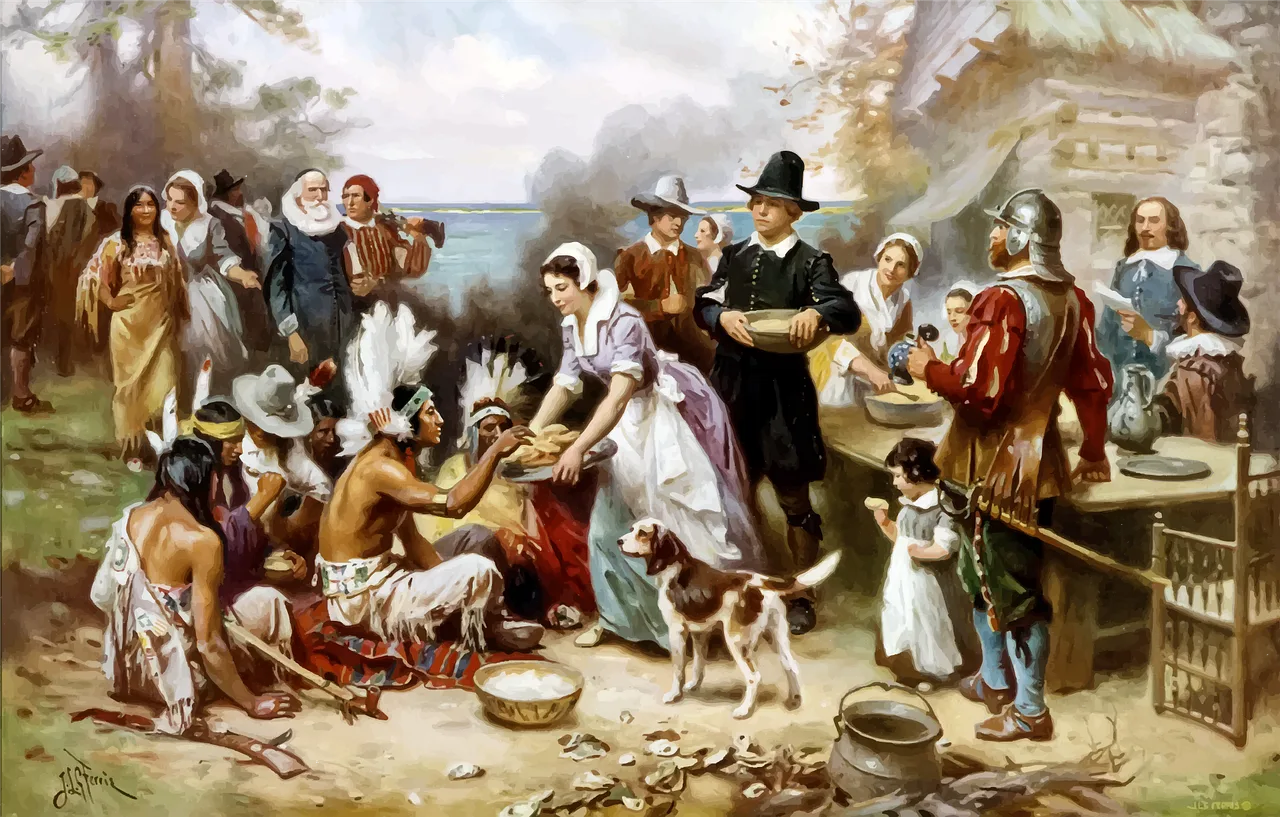
If the Pilgrims could speak to us today, they would not recognize our technology, our cities, or the speed of our lives.
But they would recognize something far deeper: the ongoing struggle to build a society rooted in faith, conscience, and shared responsibility.
Their journey across the Atlantic was not simply an escape from persecution. It was a search for a place where ordinary people could shape their own community under God’s guidance — a seed of democracy planted long before the founding of the United States.
The Pilgrims believed that faith could guide public life. They insisted that leaders must be accountable to the people and to God, not to a monarch. Their Mayflower Compact, signed in 1620, was a covenant — a sacred agreement — where they pledged to govern themselves “for the general good.”
It was not perfect, and its vision was narrow compared to our modern ideals. Yet, it was a remarkable beginning: a community choosing to build society through shared decision-making, prayer, and mutual sacrifice.
If the Pilgrims spoke to us now, perhaps they would say:
“Do not forget that freedom is not an inheritance — it is a practice.”
The Pilgrims knew that freedom was fragile. They lost half their number in the first winter. Their survival required cooperation, humility, and willingness to place the community’s needs above individual comfort.
They prayed together, worked together, and endured hardship together. Democracy, for them, was not merely a system of government — it was a way of living in covenant with God and neighbor.
The Pilgrims might also say:
“Guard your unity.”
The Pilgrims did not always agree, yet they remained bound by a shared purpose. Today, we face deep divisions — political, cultural, moral. The Pilgrims would remind us that unity does not mean sameness, but commitment to one another. As Scripture teaches, “If a house is divided against itself, that house cannot stand.” (Mark 3:25) Democracy suffers when citizens cease to see each other as fellow children of God.
And the Pilgrims might offer a caution:
“Beware of pride.”
The Pilgrims believed all authority was under God. They knew that power can corrupt, that self-interest can overshadow justice, and that societies falter when humility is lost. In their time, they wrestled with how to treat others justly — and like every generation, they did not always succeed.
Yet the lesson remains: A democracy without humility and repentance cannot endure.
Finally, the Pilgrims would give us hope:
“Remember why we came.”
The Pilgrims did not cross an ocean for wealth, fame, or ease. They came to form a community where conscience could flourish and where worship could be free. Their faith sustained them then, just as faith can sustain us now.
To preserve democracy today is to continue their work: building a society grounded in truth, compassion, justice, and reverence for God’s image in every person.
We are the inheritors of their experiment — an unfinished calling.
And so the Pilgrims might leave us with this prayerful charge:
Walk humbly. Seek peace. Do good. Protect the dignity of all people. Let your lives bear witness to the God who guided us and is still guiding you.
And remember that freedom, once given, must be cherished — not only with words, but with courage, sacrifice, and love.
By Medard Laz
Reflecting on the words above, what are the Pilgrims saying to YOU this Thanksgiving?
LOVE AND COMPASSION ARE THE HIGHEST FORMS OF INTELLIGENCE GIVEN TO US BY GOD!
As with the food on your Thanksgiving table – Please Share!!
