
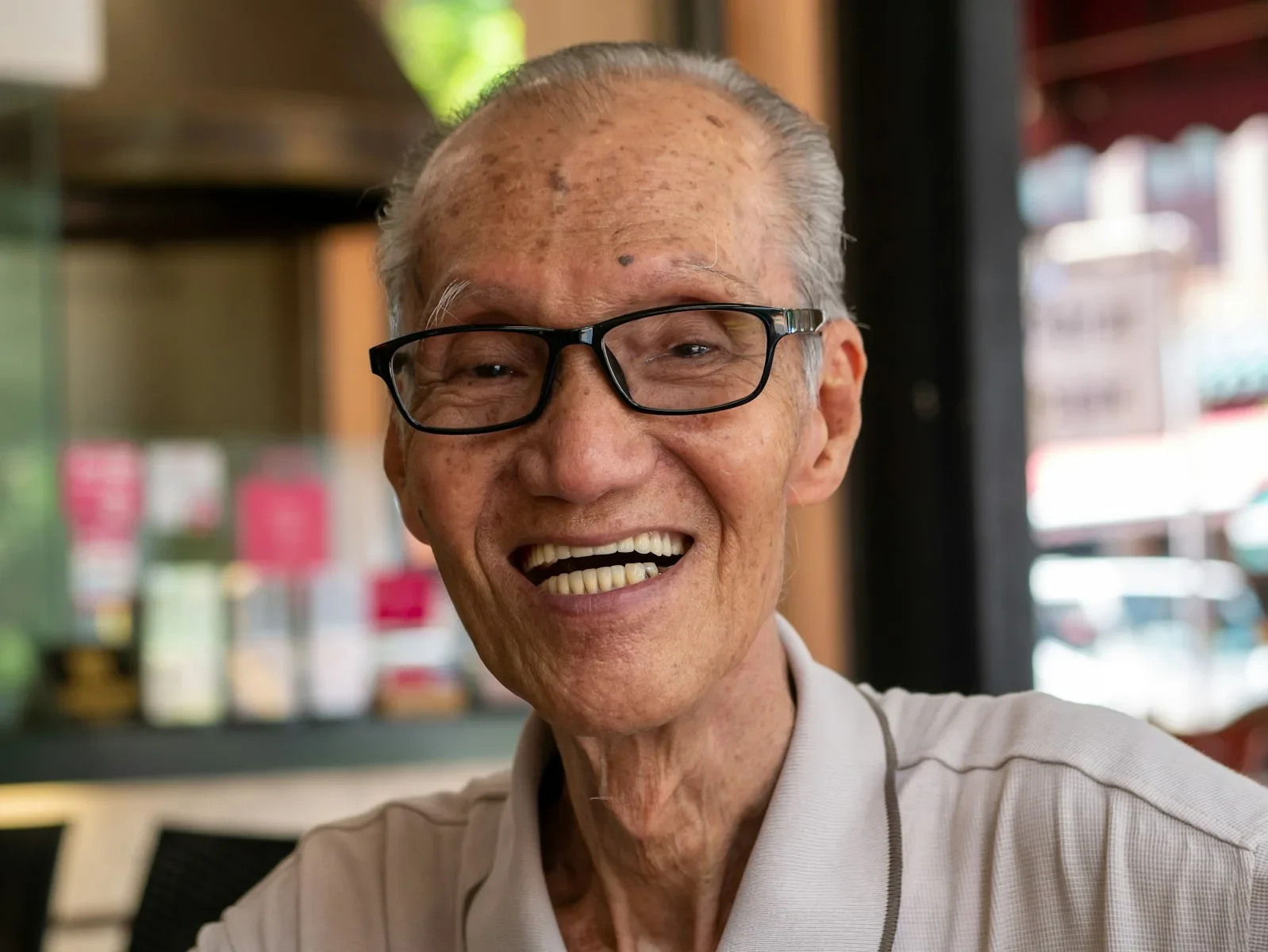
In 1974, a twenty-three-year-old man named Dan Jury made a decision that went against everything expected of someone his age.
He took his eighty-one-year-old grandfather, Frank Tugend, out of a nursing home and brought him into his small apartment.
Dan was young. He had no money to spare. No medical training. No guarantee that he would be able to handle what lay ahead. But he had watched his grandfather fade inside an institution, surrounded by routines instead of relationships, efficiency instead of tenderness. And he could not accept that this was how the man who had shaped his childhood would spend the end of his life. So Dan brought him home.
From that moment on, Dan became a caregiver in every sense of the word. He helped Frank bathe. He gave him medication. He cooked, cleaned, lifted, waited, stayed. He learned the slow rhythms of an aging body. He learned how fragile dignity can be, and how carefully it must be protected.
Friends his age were building careers, falling in love, chasing independence. Dan was changing sheets, sitting through long nights, and holding a hand when pain made words impossible. People told him he was sacrificing his youth.
Dan would later say those years taught him more about life than anything else ever could. As Frank’s health declined, Dan began to photograph their days together. Not staged portraits. Not sentimental images. Honest ones. A frail body resting. A grandson leaning close. Moments of exhaustion, tenderness, frustration, humor, and quiet connection.
Nothing was hidden.
In 1978, Dan and his brother Mark published the photographs in a book titled Gramp.
The book was unlike anything most Americans had seen. Aging was usually kept behind closed doors, handled by institutions, softened or erased in public life. Gramp showed the truth. The vulnerability. The intimacy. The humanity of dying at home, surrounded by someone who loved you. The images were difficult. They were also deeply moving.
Frank Tugend, who had lived through war, labor, hardship, and loss, became a teacher in his final years. Not through speeches or advice, but through presence. Through the way he accepted help without surrendering dignity. Through the way he allowed himself to be seen, cared for, and loved.
He taught Dan patience. He taught him how love shows up in small, unglamorous acts. He taught him that care is not something you delegate when life becomes inconvenient.
When Frank died, Dan was changed forever.
Their story quietly shifted how many people thought about elder care in America. It challenged the idea that institutions were always the most humane option. It showed that caring for an aging family member is not a burden to endure, but a relationship that can deepen both lives.
Dan did not lose his youth.
He spent it learning how to love without turning away.
And in doing so, he helped the rest of us see aging not as something to hide, but as a final chapter that still deserves tenderness, dignity, and human presence.
Weird World
How have YOU struggled with caring for an aging family member?
DEAR GOD: I NEED YOU MORE THAN EVER. PLEASE BRING PEACE TO MY CONFUSION, JOY TO MY SADNESS, AND HOPE TO MY HEART.
My Commentary:
This story reminds us that love is not measured by convenience, but by commitment.
At an age when most young adults were pursuing careers and independence, Dan chose a different path. He welcomed his aging grandfather into his home and cared for him with patience, tenderness, and dignity. The world saw sacrifice. God saw love.
Dan lived the commandment, “Honor your father and your mother.” Honoring our elders is about more than respect. It means standing beside them when they are weak, vulnerable, and in need of care.
Jesus spent His life serving those whom others overlooked. He touched the sick, comforted the lonely, and restored dignity to those the world had forgotten. Dan followed that same path. He discovered that changing sheets, preparing meals, and holding a trembling hand are not ordinary chores. They are holy acts of love.
Our culture often values youth, productivity, and independence. Christ values faithfulness. He teaches that whatever we do for the least, the weakest, and the most vulnerable, we do for Him.
Dan did not lose four years of his life.
He invested them in something eternal.
And in caring for his grandfather, he discovered one of God’s greatest truths: love grows deepest when it stays.
Have you given up watching the News on TV? Too many people say the News makes them depressed. This is why I wrote the book — WHAT MAKES AMERICA AMERICA. People tell me that reading my book leaves them feeling good, feeling good about America.
I have 62 short Chapters that look at every aspect of life in America, from Pets to Caring for the Less Fortunate. Here is the link https://a.co/d/00Lyqe1C that will connect you with my Amazon page. Click READ SAMPLE and you can read the first few Chapters of my book for FREE. It’s a great way to celebrate America’s 250th Birthday!
