
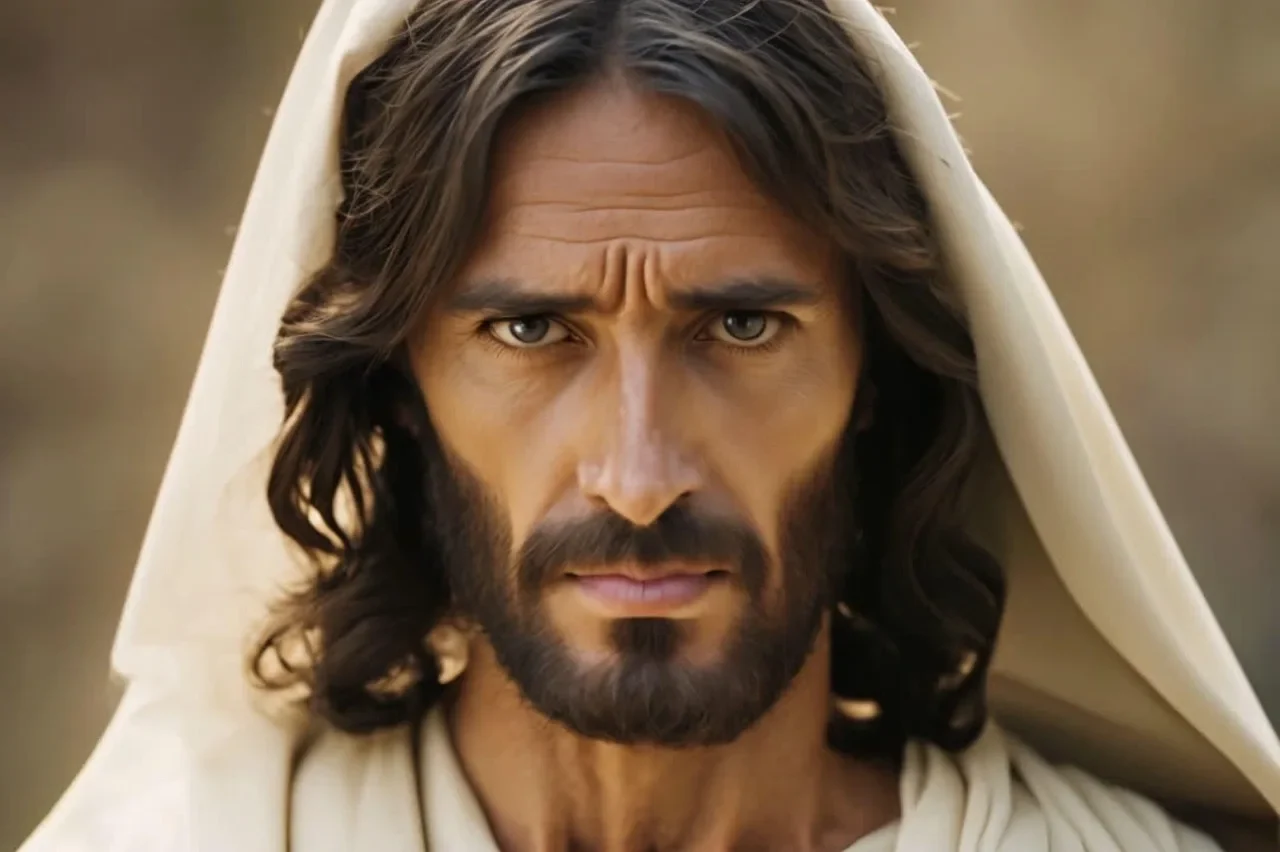
Imagine that Jesus is watching television with his twelve disciples. They’re on furlough from teaching and healing, taking it easy in the living room of Peter’s mother-in-law, doing a little mindless channel surfing. Maybe they catch a little of the final NCAA Tournament game, March Madness. These are guys, you know, just relaxing from a demanding schedule.
But eventually the late evening news comes on. They put down the popcorn and listen intently to the day’s tragedies. One disciple says, “Hey, Jesus, that terrible mass shooting in Orange, California….Do you think that those three people who died were worse sinners than other people?”
It was a popular question in Jesus’ day. Still is. If something bad happened, it must have been for a reason. Jesus scratches his beard for a moment. “No, they didn’t die because of anything they did. It was a purely random thing. But let me tell you something. Unless you guys clean up your acts, you’ll die just as tragically.”
There is a low murmur in the room. The disciples look at each other like Jesus has missed his morning pills. As two of them begin to leave to find a bathroom, the newscaster reports another catastrophe.
Jesus pipes up this time. “Hey, guys,” he says, “those people over in Taiwan. What about them? That passenger train smashed into a truck killing 48 people and leaving many trapped inside. Does that mean that these Taiwanese were worse sinners than their neighbors in China?”
Jesus waits for his question to sink in, then he continues, “No, the tragedy had nothing to do with their morals. Those people were just in the wrong place at the wrong time.”
The disciples breathe a sigh of relief, gladdened to know that God doesn’t work that way. But then Jesus looks at them all. “Let me tell you something, though. Unless you guys start going in the right direction, you will share a similar fate as those poor souls.”
Somebody got up and changed the channel after that.
My Commentary:
This reflection cuts through one of the oldest and most persistent misunderstandings about God: the belief that tragedy is a direct punishment for personal sin. It is a question people asked in Jesus’ time, and it is one we still ask today — quietly, sometimes guiltily, but often sincerely. Why them? Did they do something to deserve it?
Jesus refuses that way of thinking.
He makes it clear that suffering and tragedy are not neat moral equations. Bad things do not happen only to bad people. Sometimes, as hard as it is to accept, people are simply “in the wrong place at the wrong time.” That truth unsettles us because it removes the illusion of control. If tragedy is not tied to personal guilt, then none of us are exempt. Life is more fragile than we would like to admit.
But then Jesus does something unexpected. He turns the conversation away from them and back to us.
“Unless you change, you will all perish as they did.”
At first, that sounds harsh, even confusing. But He is not threatening punishment — He is calling for awakening. He is saying: Do not waste your life trying to explain tragedy. Let it remind you how precious and uncertain life is.
In other words, tragedy is not a lesson about someone else’s sin. It is a wake-up call about our own lives.
We are often tempted to stand at a distance, analyzing suffering as if it belongs to others. Jesus draws us closer. He asks us to examine our direction, our priorities, our hearts. Are we living truthfully? Are we loving deeply? Are we becoming who we are meant to be?
The disciples’ discomfort in the story is telling. They want reassurance, not challenge. They want to understand the rules, not confront their own need for change. And when the message becomes too personal, too direct — someone changes the channel.
That, too, feels familiar.
We live in a world of constant distraction, where it is easy to move past hard truths. But Jesus does not let us stay comfortable. He gently but firmly redirects us: Do not focus on why others suffer. Focus on how you are living.
In the end, this is not a message of fear, but of urgency and grace. Life is unpredictable, yes — but it is also a gift. And every moment is an opportunity to turn more fully toward what is good, what is true, and what is loving.
The tragedies we see are not explanations. They are invitations.
Invitations to wake up. To change direction. To live more deeply.
Before someone changes the channel again.
What “wake up call” did YOU receive to change the direction of YOUR life?
IF YOU CAN TRUST A PUZZLE COMPANY TO MAKE SURE EVERY PIECE IS IN THE BOX, WHY CAN’T YOU TRUST GOD THAT EVERY PIECE OF YOUR LIFE IS THERE TOO?
“I’m sitting in the doctor’s waiting room reading today’s Treat for the Soul. Thanks for reconnecting me with this daily lift.” A friend sent me this after he invited someone to subscribe to Treatsforthesoul.org. Please reach out to a friend to subscribe. It’s FREE.
