
There was a $4 tip on a $47 grocery order and a taped handwritten note to the front door that said, “Please just leave it. I’m okay. Thank you for coming.”
I almost did.
I almost set the bags down, turned around, and drove to my next stop.
Something made me knock anyway.
It took a long time before the door opened. A man in his late seventies stood in the frame, leaning heavily on a metal walker. He was dressed carefully, the way people from a different generation dress when they are expecting company. A collared shirt. Slacks with a crease ironed into them. His hands shook, but his chin was up.
“I told them to leave it,” he said. Not unkindly. Just tired.
“I know, sir. I just wanted to make sure everything got here okay.”
He looked past me at the paper bags on the step. Four of them. He looked at his walker. He looked back at me.
He didn’t say anything.
I said, “Let me bring these in for you.”
He stepped aside without arguing, which told me everything.
The living room was neat in the way that small, careful lives are neat. Every surface was clear. Nothing out of place. But the furniture was old, and the carpet was worn to gray threads in the paths he walked every day, the same routes, over and over, from chair to kitchen to bathroom and back.
I brought the bags to the kitchen counter and started setting things out.
That’s when I saw the notepad on the table.
It was covered in columns of handwritten numbers. Grocery prices, worked out to the cent. Items crossed off and rewritten. A running total scratched out and recalculated, line by line, until the math came out to something he could afford.
He had planned this order for days.
I kept my face still.
He stood in the doorway and watched me put the milk in the refrigerator. “My daughter usually comes Saturdays,” he said. “She’s in Phoenix now. New job.”
“That’s a long way.”
“Yes.” He paused. “She calls.”
There was no self-pity in it. That was the worst part. He said it the way you’d read a weather report. A simple fact about the world he was living in now.
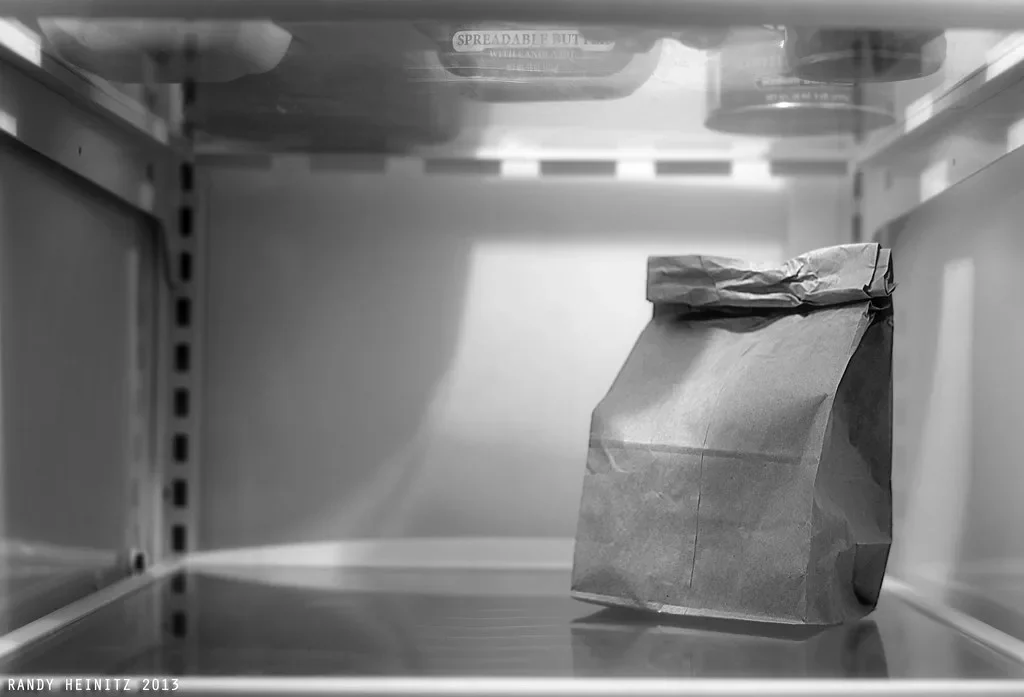
I looked around the kitchen without making it obvious that I was looking. The refrigerator was running but it was nearly empty. A stick of butter. Two eggs in the carton slot. A small jar of instant coffee. The pantry door was open and the shelves were light.
On the windowsill, there were seven prescription bottles lined up in a row.
Seven.
He followed my eyes and straightened slightly. “I manage fine,” he said.
He was a man who had managed everything, his whole life, and now managing meant choosing which prescription he could fill this month and which one he could stretch another two weeks. Managing meant calculating a grocery order down to the penny and taping a note to the door so no one would see how long it took him to walk from the bedroom to the front step.
I finished putting things away. I didn’t rush.
“Were you a working man?” I asked. Just to give him something to say.
His face changed. “Thirty-one years in the trades,” he said. “Sheet metal. Union shop.” He almost smiled. “Good work. Hard work.”
Thirty-one years of hard work, and now he was alone in a house with seven pill bottles and an empty refrigerator and a notepad full of crossed-out numbers.
I told him I’d be right back.
I drove around the corner to a gas station with a decent deli counter. I bought what I could. A hot rotisserie chicken wrapped in foil. A quart of soup. A package of rolls. Two containers of yogurt. A bunch of bananas. I used the tip money and then I used my own.
When I walked back in, he was sitting at the kitchen table with the notepad closed in front of him.
I set the bag down and unpacked it without explaining. He watched me for a long moment.
“Son,” he said. His voice broke on the word and he stopped. He pressed his lips together and tried again. “You didn’t have to do that.”
“I know.”
He put his hand flat on the table and stared at it. His knuckles were scarred from decades of work. His wedding ring was still on his finger, worn thin as a wire.
I left before it got harder for both of us.
I sat in my car and I thought about what we ask people to do to survive in this country. We shake hands with men like him at parades. We put their faces on Veterans Day posts. We call them the backbone of America.
And then we leave them alone in quiet houses with empty shelves and a notepad full of numbers they can’t make add up.
He built things with his hands for thirty-one years.
He deserved more than a $4 tip and a note on the door asking the world to just walk away.
Check on someone this week. Not with a text. Show up.
By Laura Keim
The top 1% in the United States hold more wealth than the bottom 90%.
My Commentary:
This story is a quiet indictment of a world that has learned how to look past people.
What stands out most is not the man’s poverty, but his dignity. He is not asking for pity. He is not complaining. He is doing what he has always done — managing, calculating, enduring. He is a man formed by responsibility, by work, by self-reliance. Even now, when life has narrowed to careful steps and counted pennies, he carries himself with that same quiet strength. And yet, beneath that strength, there is a loneliness that no calculation can solve.
The handwritten note on the door says more than words: “Please just leave it.” It is the voice of someone trying not to be a burden. It is also the tragedy of a culture that has made independence such a virtue that people feel ashamed to need one another.
But something sacred happens when the driver knocks anyway.
That simple act — crossing the threshold, carrying the bags, returning with food — breaks through the isolation. It is a reminder that compassion is not abstract. It is concrete. It shows up. It notices. It refuses to walk away.
From a Christian perspective, this is the Gospel in action. Christ does not pass by the suffering quietly. He stops. He enters. He restores dignity not by words alone, but by presence. “I was hungry and you gave me food.” Not, “you sent a text,” or “you meant well,” but you came.
The final reflection about wealth is not just economic — it is moral. A society can be prosperous and still fail its people. When those who have given their lives in honest labor are left alone with empty shelves and silent rooms, something essential has been lost.
And yet, hope remains — not in systems alone, but in hearts willing to act.
“Check on someone this week. Not with a text. Show up.”
That is not just advice. It is a call. Because sometimes the difference between despair and dignity is simply a knock on the door.
WHO in YOUR life does this story remind you of? Is there a door to knock on? Is there a place where YOU can show up?
THE WORLD SAYS, “LOOK OUT FOR YOURSELF!” BUT GOD SAYS, “LOOK OUT FOR OTHERS AND I WILL LOOK OUT FOR YOU!”
Do you enjoy reading a book with 5-Minute Chapters. Check out my new book: WHAT MAKES AMERICA AMERICA.
I have 62 short Chapters that look at every aspect of life in America, from Affordability to Elvis. Here is the link https://a.co/d/00Lyqe1C that will connect you with my Amazon page. Click READ SAMPLE and you can read the First Two Chapters of the book for FREE.
