
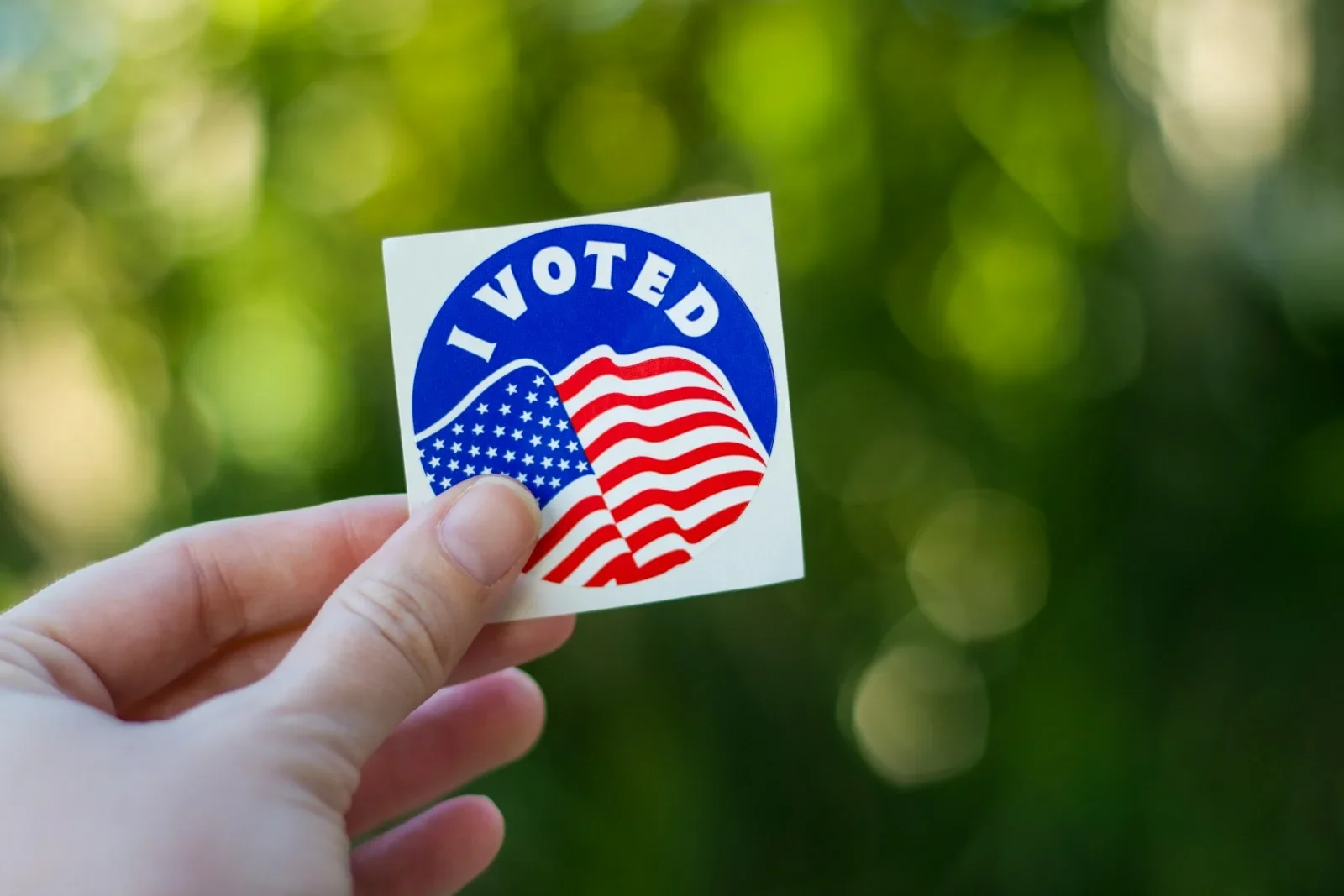
Jesus never told His followers which political party to join or which candidate to support.
But He gave us something far more important: a responsibility to love our neighbors.
And that responsibility does not end at the voting booth.
Every election involves decisions that affect human lives. Who will have access to healthcare? How will we care for the poor? Will children receive a good education? How will we protect human life, welcome strangers, preserve religious freedom, and pursue peace?
These are not simply political questions. They are moral questions because they concern human beings.
Jesus said, “Whatever you did for one of the least of these, you did for me.”
Voting is one way we can take those words seriously.
The Catholic Church teaches that citizens have a responsibility to contribute to the common good, including through participation in public life. Voting is ordinarily an important expression of that responsibility.
But Christians must remember something essential: No political party owns the Gospel. No candidate perfectly represents Jesus Christ.
Our faith should inform our politics, but our politics should never replace our faith.
That means we must approach elections with an informed conscience, not blind loyalty. We should examine candidates’ character, honesty, policies, and concern for human dignity. We should consider how decisions will affect the poor, the elderly, immigrants, children, the unborn, and generations yet to come.
And we must be willing to question our own political preferences.
Voting is not merely about asking, “What is best for me?” It is also about asking, “What is best for my neighbor, especially the neighbor who has no voice?”
Some Christians may conclude in conscience that they cannot support any candidate.
That decision deserves serious reflection. But indifference to the common good is not a Christian virtue.
There is another important truth: our responsibility does not end when the votes are counted.
We must continue holding elected officials accountable, speaking against injustice, serving our communities, and respecting those who disagree with us.
Jesus called us to be the salt of the earth and the light of the world. Salt cannot preserve what it refuses to touch. Light cannot illuminate what it refuses to enter.
Perhaps voting is one small way of bringing our Christian conscience into the public square.
We vote not because politics is our religion, but because our religion teaches us to care about people.
And when we enter the voting booth, perhaps our simplest prayer should be:
“Lord, help me choose not merely for myself, but with love for all Your children.”
By Medard Laz
Please Go and Vote Today if YOU Have Not Already Voted!!
THE PRESENCE OF GOD WILL NOT ALWAYS FIX YOUR PROBLEMS, BUT IT WILL CLARIFY YOUR PERSPECTIVE!
