
He slid a handwritten note under the windshield wiper of my delivery van while I was still behind the wheel. I almost drove away without reading it.
It was a Tuesday afternoon in late November, one of those flat gray days where the sky looks like wet cement and the cold gets into your collar no matter how many layers you’re wearing. I had six more stops on my route. I was already running behind. But something made me reach through the window and unfold the paper.
It said: “The woman at 412 Briar hasn’t eaten in two days. She won’t call anyone. Please.” No name. No phone number. Just that. I sat there for a long moment. I looked at my clipboard. I looked at the note again.
I drove to 412 Briar. The house was a small ranch-style home on a quiet street, the kind of neighborhood where every yard used to have a swing set and now most of them just have a For Sale sign or a rusted basketball hoop nobody uses anymore. The gutters were sagging. The welcome mat was faded to the point where you couldn’t read what it once said.
I knocked. Nothing. I knocked again, harder this time. A shuffle. Then a pause so long I nearly left.
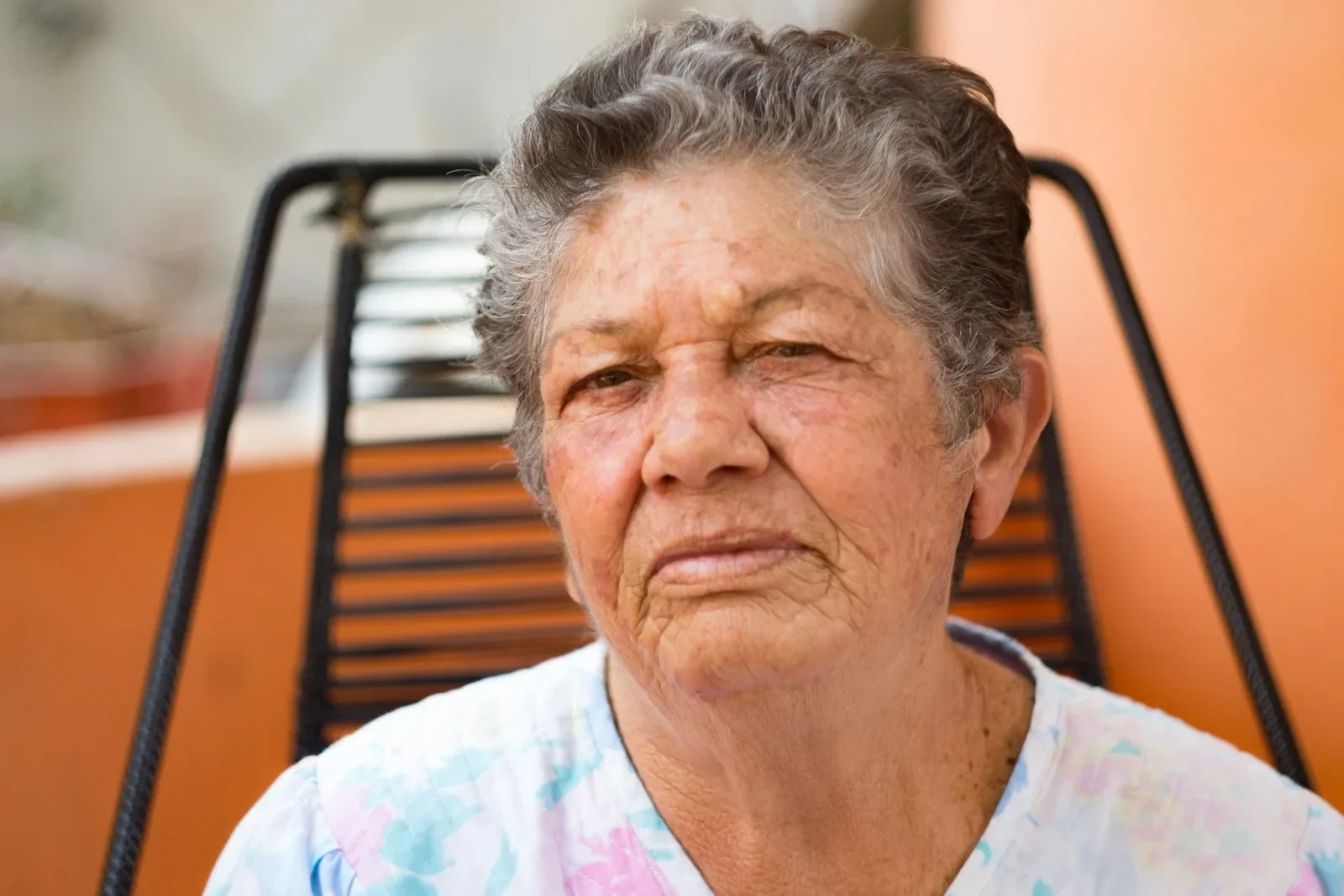
The door opened three inches, held by a brass chain lock. A woman peered through the gap. She was maybe eighty. Her eyes were sharp and pale blue, but her cheekbones were hollowed out in a way that took me a second to process.
“I didn’t order anything,” she said.
“I know,” I told her. “Someone left me a note.” She stared at me. The chain stayed on.
“I’m not here to sell you anything,” I said. “I just want to make sure you’re okay.”
She was quiet for a long time. The wind pushed between us. Then the chain came off.
Inside, the house was tidy in the way that only people with genuine pride keep things tidy when they have almost nothing left to keep. Every surface was clean. A folded quilt was draped over an armchair with a precision that told me she had refolded it more than once that morning, just to have something to do. There was a small side table with a reading lamp, a library book, and a prescription bottle that was completely empty.
That bottle had been empty for eleven days. I found that out later. She lowered herself into the armchair. She moved slowly, the way people move when their body has become something they have to negotiate with.
“I was a home health aide for twenty-six years,” she said, unprompted, as if she needed me to know who she had been before I saw who she was now. “I spent my whole career making sure other people weren’t alone when they were sick.” She looked at her hands. “I didn’t think it would look like this for me.” I asked if I could check her kitchen. She nodded without looking up.
The refrigerator held a jar of pickle juice, a stick of margarine worn down to a thin sliver, and a single egg. The cabinets had a box of saltine crackers, mostly empty, and a can of chicken broth with no pull tab and no can opener in sight. That was it.
I called my dispatcher. I told him I had a family emergency and needed forty minutes. He wasn’t happy. I told him to dock my pay. I went to the grocery store two streets over. I didn’t buy anything fancy. I bought what my own grandmother would have needed. A rotisserie chicken. A carton of vegetable soup. A small bag of apples. Whole grain bread. A can opener. Instant oatmeal. A half-gallon of orange juice. And at the pharmacy counter, I asked about her prescription by name. The pharmacist said it was a maintenance medication. A thirty-day supply was sixty-two dollars without insurance. I paid for it.
When I came back, she was still sitting in the same chair, the quilt folded in her lap like she hadn’t moved an inch. She looked at the bags in my arms and her face did something I won’t forget. It didn’t crumble. It didn’t break open. It just went very, very still. Like someone who had been holding their breath for a long time had finally been told it was safe to exhale.
“I don’t know who left that note on your van,” she said quietly. “But I’m glad somebody still sees people like me.”
I stayed until the soup was warm. I wrote my number on the back of a receipt before I left. I told her to use it. Here is what I keep thinking about. She spent twenty-six years going into the homes of strangers to make sure they were not suffering alone. She gave that work everything she had. And the system that benefited from all those years gave her back an empty prescription bottle and a can of broth she couldn’t even open.
We are not short on resources in this country. We are short on attention. Look up from your phone. Look at the house next door. Look at the woman in the parking lot who seems fine. She might not be fine. Someone left a note on a stranger’s windshield because they didn’t know what else to do. That note changed everything.
You don’t have to save the world. You just have to see it.
Thanks to Weird World
My Commentary:
This reflection tells us what a person who walks in the footsteps of Jesus does, because it reveals the quiet holiness of simply showing up for another human being. That is what Jesus did.
The delivery driver could have done the easy thing. Leave the food. Drive away. Stay safely within the boundaries of a job description. But something in him refused to ignore the deeper hunger standing behind the grocery order. He recognized that sometimes what people need most is not merely food, but dignity, presence, and the reassurance that they have not been forgotten.
The image of the woman sitting alone in the dark house is heartbreaking. Her husband gone. Her children far away. Illness draining her strength. And perhaps most painful of all, the fear of becoming invisible. When she says, “No one should have to die alone,” she speaks for countless lonely souls carrying burdens no one sees.
Seeing with the eyes of Jesus, the driver becomes more than a deliveryman in this story. He becomes a neighbor in the truest Gospel sense of the word. Jesus once asked, “Who was neighbor to the wounded man?” The answer was simple: the one who stopped. That is exactly what happened here.
The driver noticed. He listened. He crossed the threshold of another person’s suffering instead of remaining comfortably distant. And in doing so, he revealed something sacred: compassion is often less about solving problems and more about refusing to let another person suffer unseen.
The line, “I don’t think it would look like this for me,” is especially powerful. Loneliness is one of the deepest fears of the human heart. We all long to believe that when our own weakness comes, someone will care enough to knock on the door.
And that is where Christianity speaks most clearly. Christ consistently moved toward the lonely, the sick, the abandoned, and the forgotten. He touched lepers others avoided. He sat with the grieving. He restored dignity to those society overlooked.
The driver may not have realized it, but in that quiet moment, carrying groceries into a darkened home, he was carrying something more: human compassion infused with grace.
Sometimes the Gospel arrives not through sermons or stained glass windows, but through an unexpected knock at the door from someone who cared enough to stay a little longer.
Think of someone who stayed a little longer in YOUR life and that made all the difference in the world.
GOD CARES A LOT MORE ABOUT WHAT’S IN YOUR HEART THAN WHAT’S IN YOUR FRIDGE!
YOU can make a difference for the better in our world. Someone you know would profit from today’s Message. Only YOU can share it. Invite them to subscribe to: www.TreatsfortheSoul.org. It’s FREE! And be sure to listen to my Daily Podcast. Over 112,000 people have listened.
