
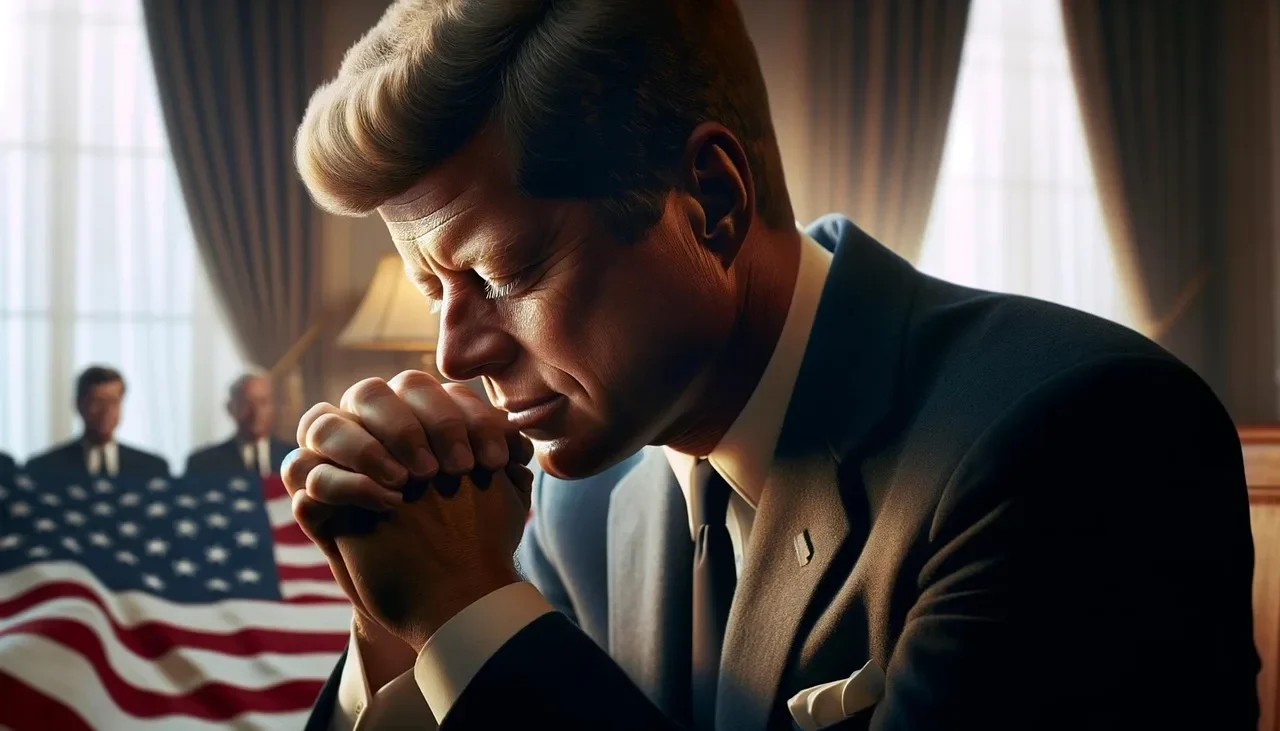
A humiliating defeat had just shaken the White House, and John F. Kennedy turned to a man from the other side of American politics.
On April 22, 1961, only days after the disastrous Bay of Pigs invasion, President Kennedy met former President Dwight D. Eisenhower at Camp David, the quiet presidential retreat in Maryland’s Catoctin Mountains. The young president was facing one of the first major crises of his administration. The operation in Cuba had failed. Critics were circling, allies were questioning American judgment, and Kennedy knew the official reports would not be enough.
The man arriving at Camp David was no ordinary adviser.
Eisenhower was a Republican icon, a five-star general, the commander who had led Allied forces in Europe during World War II, and the president who had occupied the White House before Kennedy. Kennedy had not defeated Eisenhower directly in 1960. He had defeated Eisenhower’s vice president, Richard Nixon. Still, the political distance between the two men was real.
Yet on that spring day, party labels mattered less than the burden of leadership.
According to Eisenhower’s own notes, Kennedy met him when he landed by helicopter at Camp David. The two men went to the terrace at Aspen Cottage and began to talk. Away from the noise of Washington, Kennedy laid out the Cuban situation in detail. He described the planning, the objectives, the expected results, and where the operation had begun to go wrong.
It was not a victory briefing. It was a conversation after failure.
Kennedy explained that the operation had become a complete failure. He spoke of intelligence gaps, tactical problems, damaged ships, lost communications, and prisoners taken after the invasion collapsed. The young president was already trying to understand what had happened and what lessons had to be learned.
Eisenhower could have used the moment to embarrass him. He could have reminded Kennedy that foreign policy was harder than campaign speeches. He could have offered a partisan lecture.
Instead, Eisenhower remained measured. He asked questions. He listened. He offered broad counsel, especially about resisting Communist expansion in the Western Hemisphere and strengthening regional support through the Organization of American States. He also warned that the American people would not support direct U.S. military intervention unless the provocation was clear and serious enough for the country to understand.
Eisenhower later wrote that Kennedy did not ask him for specific advice. This was not a scene of one president handing another a simple answer. It was something quieter and more human: a sitting president, still new to the office, talking through a national failure with a predecessor who knew the loneliness of command.
They talked through lunch and continued walking through the camp afterward. Later, they appeared briefly before reporters and photographers near Aspen Cottage. Kennedy said he had outlined the situations in Cuba and Laos and had asked for Eisenhower’s counsel.
When reporters asked Eisenhower whether he supported Kennedy, Eisenhower answered in the spirit of national unity, saying that in foreign affairs Americans traditionally stand behind the constitutional head of the government, the president. That was the power of the moment.
Two men from different parties, different generations, and different styles stood together after a crisis. One had inherited the burden. The other understood what that burden cost.
The meeting did not erase the failure at the Bay of Pigs. It did not undo the lives lost, the prisoners taken, or the damage done to American credibility. But it showed something rare in public life: the ability to place country above party when the stakes were larger than personal pride.
Leadership is not only proven in victory. Sometimes it is proven by the humility to seek counsel after defeat, and by the grace to give it without cruelty.
What is each President in YOUR lifetime most remembered for? What will today’s President be most remembered for?
STAY HUMBLE AND GIVE THE GLORY TO GOD!
So much has happened in American history in 250 years. But we live in a world of 20-second video bytes. We have forgotten “who we are” as Americans. This is why I wrote WHAT MAKES AMERICA AMERICA.
I have 62 short Chapters that look at every aspect of life in America, from Jazz to Football. Here is the link https://a.co/d/00Lyqe1C that will connect you with my Amazon page. Click READ SAMPLE and you can read the first few Chapters of my book for FREE. It’s a great way to celebrate America’s 250th Birthday!
